
Tag Archive for: minimally invasive

Fibroids awareness month
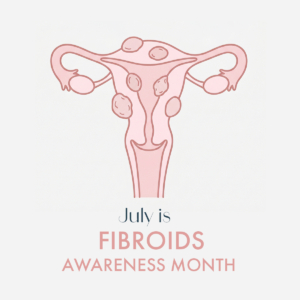
July is Fibroids Awareness Month 🌸

Uterine fibroids are non-cancerous growths that develop in or on the wall of the uterus. While some women experience no symptoms, others may face heavy menstrual bleeding, pelvic pain, frequent urination, or fertility challenges.Uterine Fibroid Embolisation (UFE) is a minimally invasive procedure that works by blocking the blood supply to targeted fibroids, causing them to shrink over time. UFE is performed through a tiny incision in the pelvic area and offers a quicker recovery time. To learn more about fibroids and the treatment options available treatment options available, please visit our website here.
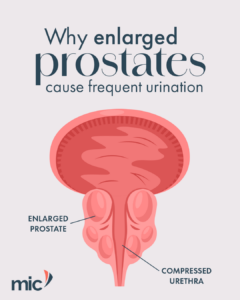
Why enlarged prostates cause frequent urination

Benign Prostatic Hyperplasia (BPH), or an enlarged prostate, can compress the urethra and disrupt the normal flow of urine. This obstruction often causes frequent urination, urgency, weak stream, and difficulty emptying the bladder. Prostate Artery Embolisation (PAE) is a minimally invasive procedure that targets the prostate’s blood supply with micro particles, causing it to shrink and relieving urinary symptoms. PAE provides an effective, non-surgical option for men seeking long-term relief from BPH. To find out if PAE could be suitable for you, please visit our website.

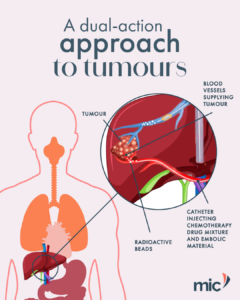
A dual‑action approach to tumours

Trans‑Arterial Chemoembolisation (TACE) is a minimally invasive procedure that treats liver tumours using a dual‑action approach. It combines targeted chemotherapy delivery directly into the tumour-feeding arteries with embolisation, where tiny particles block these vessels to cut off the tumour’s blood supply. This concentrated strategy allows the chemotherapy to act locally while depriving the tumour of oxygen and nutrients, maximising tumour control and reducing systemic side effects. Performed under local anaesthesia, TACE is precise, minimally invasive, and may require only a short hospital stay 🔬

How VABB targets non-palpable breast lesions

Vacuum‑Assisted Breast Biopsy (VABB) precisely targets non-palpable breast lesions using advanced imaging guidance. Ultrasound or mammography helps the clinician pinpoint the area of concern, while a small probe is inserted through a tiny incision. Gentle suction collects multiple tissue samples from the exact spot in a single pass, improving diagnostic accuracy. In some cases, small benign lesions can even be completely removed. This minimally invasive approach reduces discomfort and allows for faster, same-day recovery. To learn more about VABB, please visit our website.